


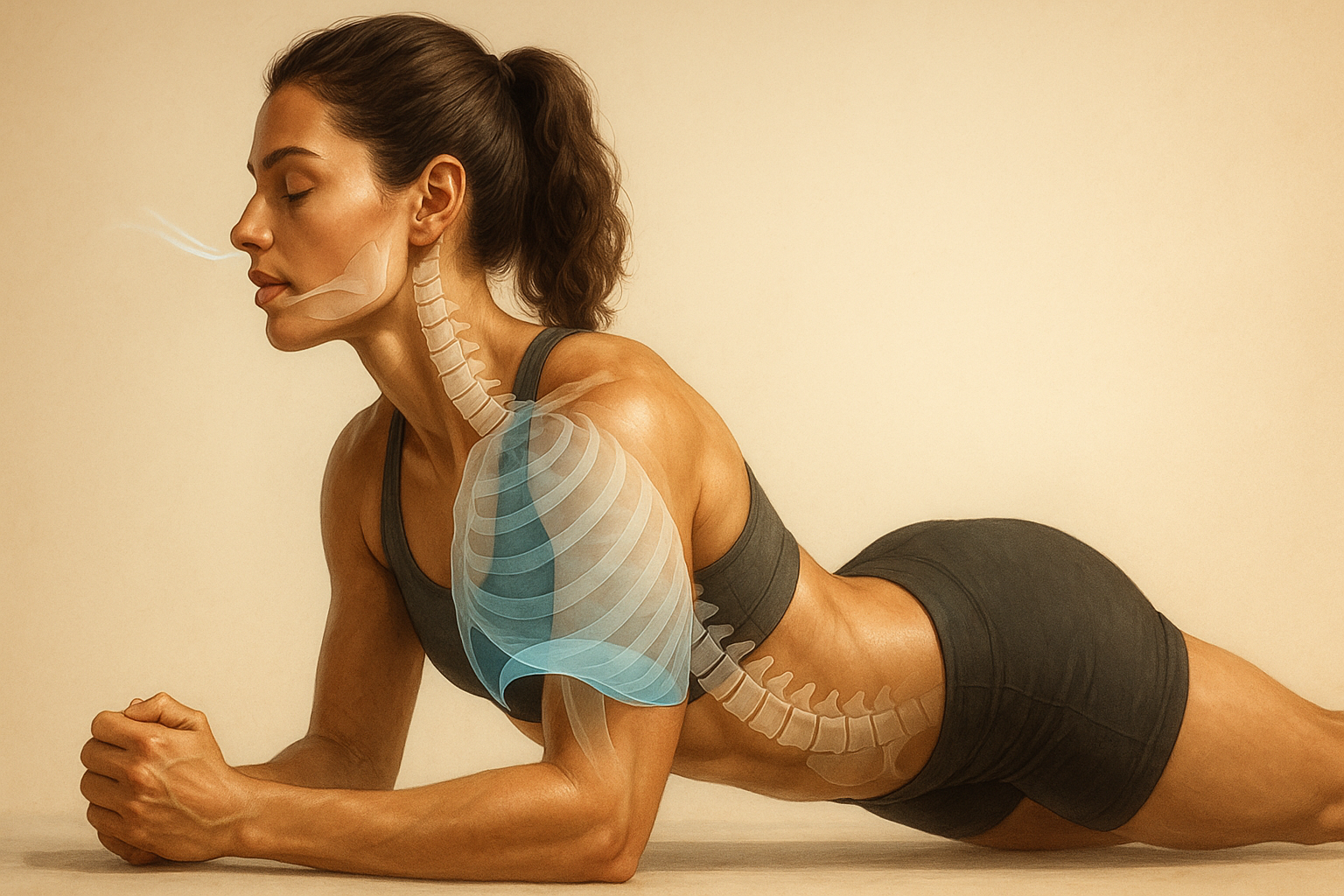
Introduction
Did you know your tongue might be the missing link in your core workouts?
We often focus on lifting heavier, stabilizing our spine, or pushing through more reps. But one area many people overlook: oral posture—how we position our tongue, how tense our jaw is, and whether we breathe through our nose or mouth. These factors don’t just matter for speech or teeth—they affect breathing mechanics, nervous system balance, spinal stability, and core engagement.
In this article, we'll explore how tongue placement, jaw tension, and breathing interrelate with core stability. You’ll learn the science, get practical drills, and come away with strategies to connect your oral posture to trunk activation, core endurance, and recovery.
1. The Science of Oral Posture and the Core
What is oral posture?
Oral posture includes where the tongue rests (roof of mouth vs. bottom), how the jaw is held (relaxed vs. clenched), and whether you habitually breathe through your nose or mouth. These positions shape the anatomy of your airway, influence head and neck alignment, and impact how your diaphragm and deep spinal muscles function.
Tongue placement and trunk activation
-
When the tongue rests on the roof of the mouth (just behind front teeth), it helps maintain a more stable palatal arch, proper tongue‑tie positioning, and more balanced biomechanical relationships in the face and neck. Disruptions here (e.g. mouth breathing or a low tongue resting position) may contribute to forward head posture or neck strain.
- The diaphragm works closely with the core musculature—transverse abdominis, pelvic floor, multifidus—to maintain intra‑abdominal pressure and stabilize the spine. Oral posture influences breathing mechanics (more on that later), and so indirectly affects how well the diaphragm can do its stabilizing work.
2. Nervous System Regulation & Parasympathetic Recovery
Jaw clenching, stress, and sympathetic activation
-
Clenching the jaw is a common response to stress, exertion, or mental tension. Doing so recruits the masseter and other jaw muscles, which are densely innervated and have connections via the trigeminal nerve to many parts of the nervous system. Chronic tension here keeps the system more sympathetic (“fight or flight”) than relaxed.
-
This overactivation interrupts recovery and can make it harder to sustain core endurance during prolonged work—when the body is trying to stay stable over time, tension that isn’t required can fatigue systems faster.
Parasympathetic recovery & oral posture
-
Relaxed jaws, nasal breathing, a tongue resting gently against the palate—all help to favor parasympathetic tone (rest & digest). This supports recovery, reduces stress hormones, improves sleep, and allows the core and respiratory system to reset.
-
There is growing evidence that oral posture (tongue, jaw) plays a role in head/neck posture, airway patency, and thereby affecting breathing and autonomic balance.
3. Breathing Mechanics and Core Stability
How breathing ties into core stability
-
The diaphragm is not only a breathing muscle but also a major stabilizer of the trunk. When you inhale properly (diaphragmatic inhalation), the diaphragm descends, the abdominal cavity expands, and pressures are distributed that help brace the spine.
-
Poor breathing patterns—mouth breathing, shallow chest breathing—lead to less diaphragm engagement, increased use of accessory muscles (neck, upper chest), and less stable trunk support. That means core muscles have to compensate, often inefficiently.
Oral posture & airway influence
-
Tongue position affects the airway space. A tongue resting low or habitually forward may obstruct the airway or require more effort for breathing. Mouth breathing bypasses the benefits of nasal breathing (filtering, humidifying, nitric oxide generation).
-
A relaxed, neutral jaw helps maintain open airway, allowing smoother diaphragmatic action and thus better intra‑abdominal pressure control, trunk alignment, and stability.
4. Jaw Clenching, Core Endurance, and Stability
Studies on jaw clenching & core endurance
-
A study of healthy adults (age ~18‑28) compared performance on the McGill Trunk Flexion and Extension Tests in two jaw positions: resting vs. clenched. They found core endurance (time held) was significantly better when the jaw was clenched.
-
In balance tasks, jaw clenching also improves postural stability in both static and dynamic steady states. For example, a PLOS ONE study found that people had better dynamic‐steady‐state balance with jaw clenching versus without.
Implications
-
Clenching can provide a “remote effect” — via neuromuscular connections and perhaps increased corticospinal excitability — boosting certain stability and endurance metrics.
-
But this doesn’t mean always clench. Overuse can fatigue muscles (jaw, neck), compromise breathing, or increase sympathetic activation if sustained. Balance is needed: use clenching in specific drills or moments, not chronically.
5. Drills to Integrate Oral Posture with Core Training
Here are practical drills focused on core stability tongue posture, tongue placement and trunk activation, jaw clenching core endurance, and the like.
| Drill | Steps / Cues | What to Feel / Pay Attention to | When to Use |
|---|---|---|---|
| Tongue‑Roof Palate Hold + Breathing | Rest tongue on roof of mouth (just behind front teeth). Lips closed, jaw relaxed. Breathe deeply through nose. Exhale slowly. | Feel diaphragm working. Less neck tension. Gentle tongue contact—not pressing hard. | Warm‑ups; daily posture check; before core work. |
| Core‑Integrated Nose Breathing Plank | In plank, set tongue on roof of mouth. Jaw relaxed. Inhale through nose; exhale through nose or pursed lips. | Deep breathing, braced core, minimal trunk shake. Reset if mouth opens. | During static core holds. |
| Jaw‑Clench ON / OFF Intervals | Gently clench jaw before lifting (moderate tension). Maintain tongue posture. Relax jaw post‑rep. | Feel increased stability. Avoid fatigue or jaw discomfort with overuse. | For heavy lifts; during max core bracing sets. |
| Breathing & Core Endurance Circuit | During holds (e.g., side plank), use roof-of-mouth tongue placement, relaxed jaw, nasal breathing. | Compare endurance vs. without cues. Reduced neck fatigue. | In your core / trunk endurance programming. |
6. Practical Tips & Caveats
-
Consistency over perfection: It may feel strange to constantly monitor tongue & jaw, but small, consistent corrections matter.
-
Avoid over‑clenching: While jaw clenching can help in certain phases (heavy lifts, short balance tasks), prolonged or unconscious clenching leads to fatigue, TMJ strain, headaches.
-
Posture & head alignment matter: If your head juts forward, tongue & jaw posture will be compromised. Practice head/neck alignment so the tongue resting position and airway alignment are optimal.
-
Breathing retraining: If you habitually mouth breathe or have difficulty with nasal breathing, you may need drills or possibly consultation (e.g. ENT, myofunctional therapy) to address congestion or structural issues.
Conclusion
From jaw tension to tongue placement to breathing patterns — oral posture is a surprisingly powerful component of core stability and overall physical function. Getting your tongue resting correctly, your jaw relaxed, and breathing through your nose can enhance trunk activation, improve core endurance, and help your body recover more effectively.
Try the drills above. Notice how your core feels during holds and lifts when you’re more aware of tongue and jaw positioning. Over time, these small adjustments can ripple outward — improving posture, reducing discomfort, and boosting performance.
If you're curious to go deeper, you might explore working with posture specialists, myofunctional therapists, or breathwork coaches who can assess your oral posture, jaw alignment, and breathing mechanics in detail.
References
- Springer. Tongue posture and spinal function. https://link.springer.com/chapter/10.1007/978-3-031-12386-3_39
- Rolling Out. Jaw tension sabotaging workouts. https://rollingout.com/2025/05/24/jaw-tension-sabotaging-workouts/
- DergiPark. Effect of jaw clenching on core endurance. https://dergipark.org.tr/en/pub/turkjkin/issue/76455/1232047
- PLOS ONE. Jaw clenching improves balance and postural control. https://journals.plos.org/plosone/article?id=10.1371/journal.pone.0299050
- PostureGeek. The diaphragm’s role in core and breathing. https://posturegeek.com/blog/diaphragm/
- Healthline. Diaphragmatic breathing: How-to and benefits. https://www.healthline.com/health/diaphragmatic-breathing
- NCBI. Autonomic nervous system overview. https://www.ncbi.nlm.nih.gov/books/NBK541120/
- BackFitPro. McGill Method – Core Endurance Tests. https://backfitpro.com/tests/mcgill-method/
- MyoAligner. What is Oral Posture? https://www.myoaligner.com/blog/what-is-oral-posture/
- NCBI. Mouth Breathing and Postural Dysfunction. https://www.ncbi.nlm.nih.gov/pmc/articles/PMC10323650/
Share:
The MORA Effect: Can a Mouthguard Actually Boost Athletic Performance?
Tongue Up = Stronger Legs? What Science Says About Tongue Posture and Knee Power